
14 hr
Bursa and Uludag Mountain Day Trip from Istanbul
Journey to the former Ottoman capital with mountain scenery, historic sites, and an optional cable car
Reserve
Hand-picked by our editors — only the best 5 experiences from 12 reviewed.
Verified partners for every tour, free cancellation where available, and instant confirmation on every booking.
14 hr
Journey to the former Ottoman capital with mountain scenery, historic sites, and an optional cable car
Reserve
13 hr
Journey to the Ottoman Empire's first capital for mountain views, historic mosques, and silk bazaars
Reserve
13 hr
Discover the Ottoman Empire's birthplace with royal tombs, silk markets, and a scenic cable car ride up Mt. Uludağ
ReservePrices from verified partners. Availability updates in real time at checkout. Free cancellation policies apply where shown.
The landmarks, rooms, and views travelers on this tour remember — all visible on a single visit.
Ground floor exhibits covering history from prehistoric times to the Ottoman era.
Features realistic wax figures of Ottoman sultans who resided in Bursa.
Basement level recreation of 18th-century workshops including coppersmiths and weavers.
An accurate architectural scale model showcasing Bursa's monuments from a bird's-eye view.
Documents the evolution of Bursa through the Republican period to present day.
Organized packages offer seamless transit for those prioritizing ease, while DIY travel provides greater autonomy for budget-conscious explorers embarking on a Bursa tour from istanbul.
| Feature | Top pick Organized Bursa Tour | Independent DIY Travel |
|---|---|---|
Logistics |
All-inclusive door-to-door transit | Ferry and public bus connections |
Travel Time |
3–4 hours transit per way | 4–6 hours depending on connections |
Cost |
Fixed price per person | 15–25 USD per person |
Flexibility |
Fixed itinerary and schedule | Fully self-determined pace |
Stress Level |
Minimal; guide handles logistics | Moderate; requires navigating local transport |
Included Stops |
Curated historical landmarks | Chosen by the traveler |
| See tickets → |
Verdict: Choosing between organized bursa tour from istanbul tours and independent transit depends on whether you value a stress-free, guided experience or the personal freedom of bursa tour from istanbul tickets purchased for local ferries.
Choose your ticket, select your date, and reserve in under two minutes. Secure checkout handled by our verified partner.
Instant confirmation by email, with a mobile voucher you can save offline. No printing, no queuing at a collection desk.
Arrive at the entrance, show your voucher on your phone, and walk in. Most tickets include priority or skip-the-line access.
Practical details for your visit straight from our verified partners — hours, access, rules, and how to get there.
Osmangazi, Bursa, Turkey
Main entrance gate
Use the T1 tram line which stops near the Osmangazi city center.
Modest clothing is recommended when visiting historical sites, particularly mosques. Ensure shoulders and knees are covered for respectful entry to religious landmarks.
Standard security checks may be conducted at museum entrances. Small personal bags are permitted, but large backpacks are discouraged.
Photography is permitted in most areas, but flash and tripod use are restricted in the main galleries. Respect posted signage regarding wax exhibit photography.
The museum ground floor is accessible, though the historic building structure may limit elevator use to upper floors. Contact the information desk for assistance.
Mobile phone use is allowed, though visitors should keep devices on silent while inside the exhibit galleries.
Interactive exhibits and wax figures engage younger visitors. Education programs are available for school groups with prior coordination.
A tea garden and cafe are located on the ground floor. No outside food is allowed within the display areas.
Service animals are permitted, but general pets are not allowed inside the museum buildings.
As of September 2026, the Bursa City Museum remains a cornerstone for understanding the region. Most signage is provided in Turkish, so mobile translation apps are recommended.
Best time to go, insider tips, nearby landmarks, and the cancellation fine print — flip through to skim what matters to you.
How crowds, weather, and events shift across the year.
Mild temperatures ideal for exploring the open-air bazaar areas.
Small details that turn a good visit into a great one.
Visit the museum during the 09:30–12:00 window to enjoy the galleries before group tours arrive.
Non-bookable sights within a short walk — free to visit, easy to pair.
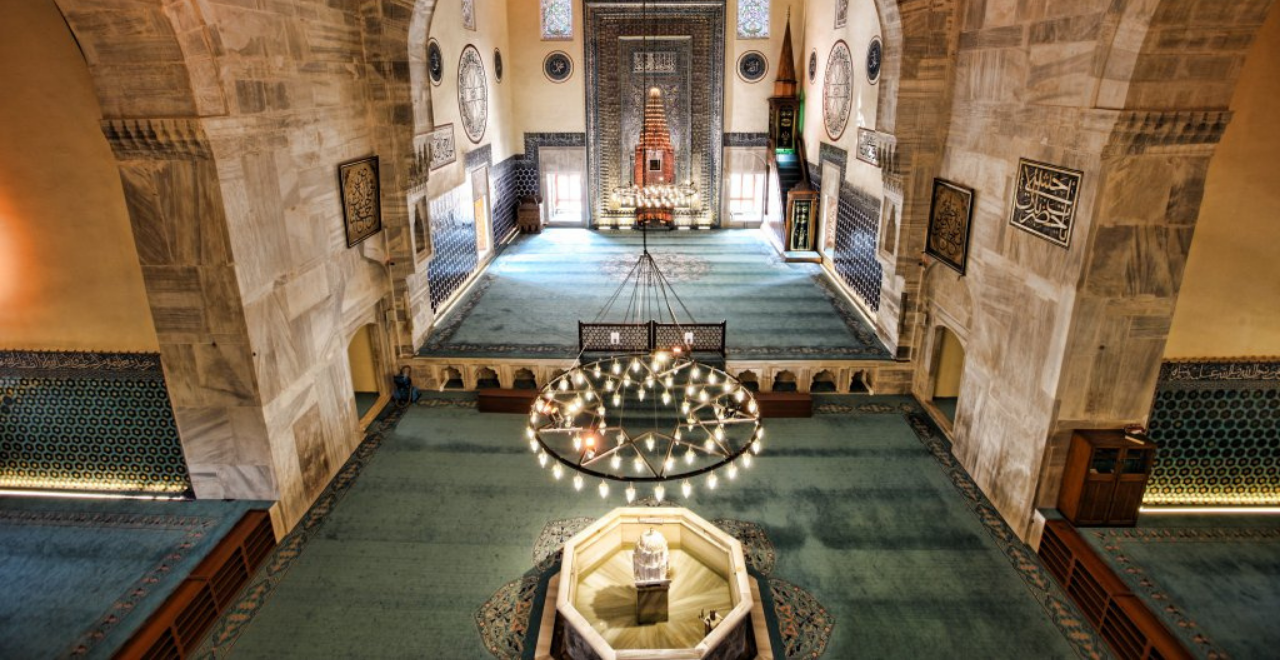
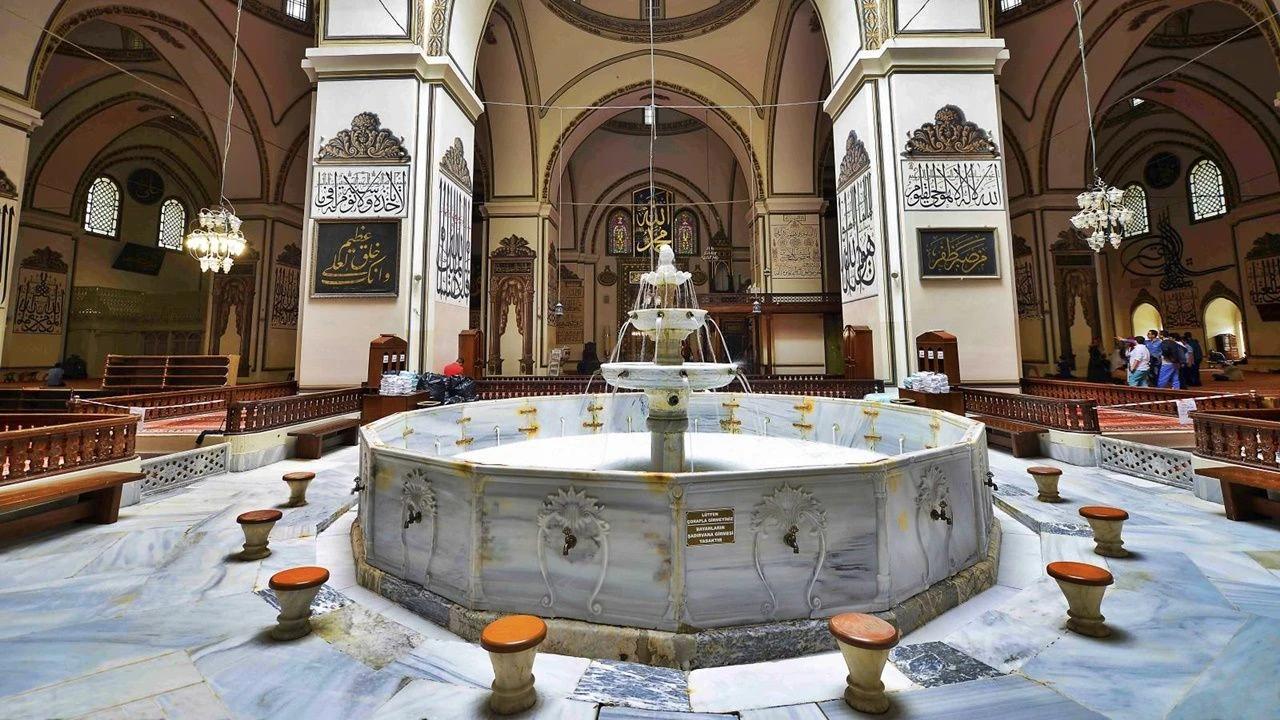
A major Ottoman mosque with 20 domes and intricate calligraphy.
Flexible, no hidden fees.
Full refunds are available for tours cancelled at least 24 hours in advance. Admission to the Bursa City Museum is 0 TRY.
Hand-picked options within walking distance — pick a district for vibe, or a specific hotel for convenience.
Central hotels near historical bazaar districts.
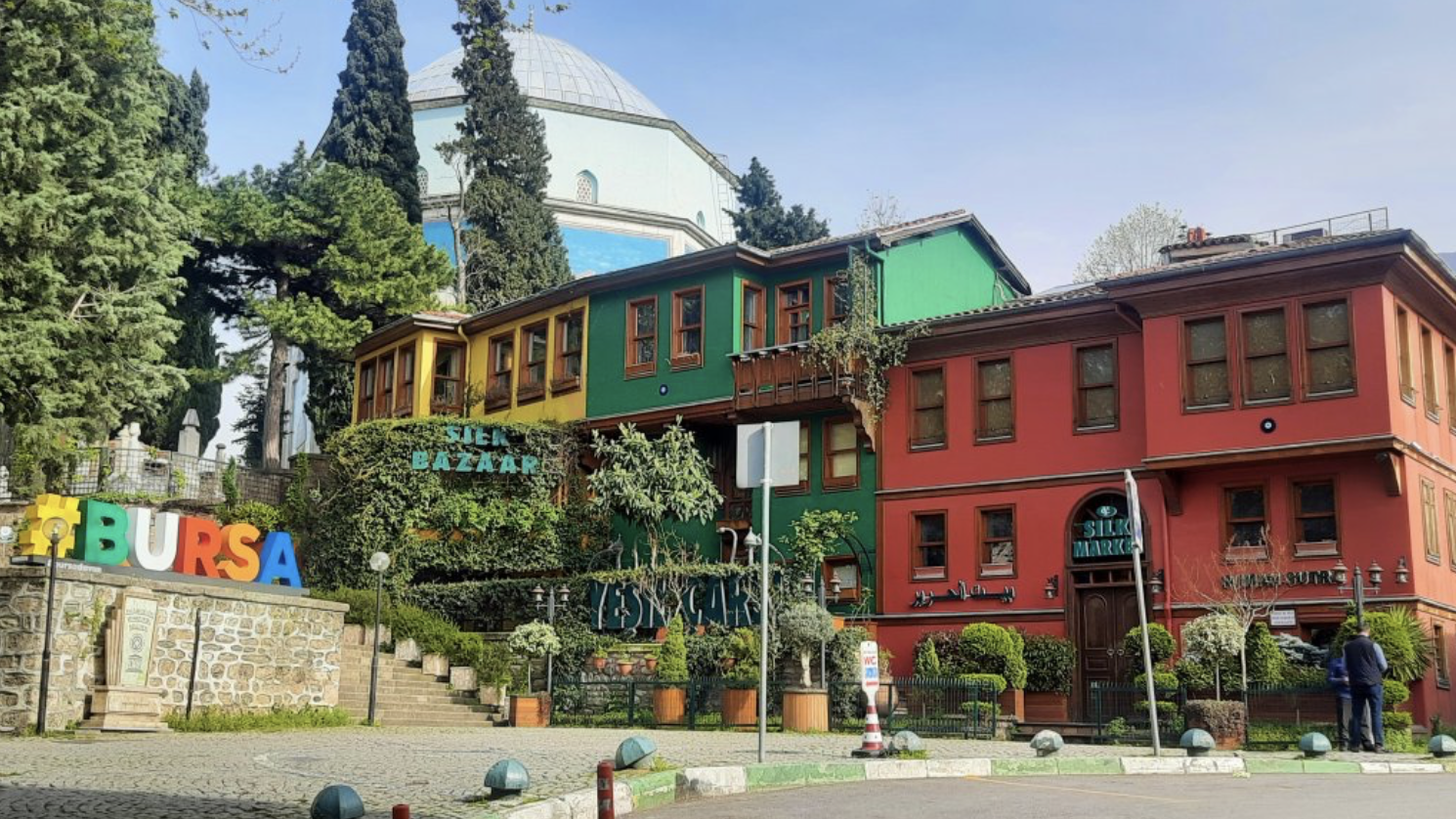
Bursa held the Ottoman throne for seventy-three years before Constantinople fell, and the weight of that first capital lingers in every mosque courtyard and every twist of the Koza Han silk arcade. Orhan Gazi chose the site in 1326 for its thermal springs and strategic position at the base of Uludağ, the mountain the Byzantines called Olympos of Mysia. The city became a laboratory for imperial architecture: Yeşil Camii, completed in 1424, introduced the Persian tile work and asymmetric interior that would define Ottoman sacred space for the next two centuries. Its mihrab holds more than fifteen thousand hexagonal tiles, each hand-cut in Iznik kilns. Today Bursa moves between its industrial present and its curated past with little friction. The Setbaşı district preserves timber-frame houses from the seventeenth century, their upper stories cantilevered over cobbled lanes too narrow for cars. Koza Han, the silk cocoon market built in 1491, still trades raw thread beneath its octagonal fountain, though most stalls now serve tea to tour groups. The Grand Mosque—Ulu Cami—anchors the old quarter with twenty domes and a forest of calligraphic panels; Sultan Bayezid I commissioned it in 1396 as thanks for his victory at Nicopolis. The fountain inside the prayer hall is functional, not decorative: ablutions occur within the sacred perimeter, a design choice abandoned in later centuries. Uludağ rises 2,543 meters behind the city, accessible by the longest gondola lift in Turkey. The cable car replaced the narrow mountain road in 1963 and cut the ascent from ninety minutes to twenty-two. Winter brings skiers; summer brings hikers and families escaping coastal heat. The upper station sits at 1,810 meters, high enough that pine gives way to alpine meadow. On clear days the view extends across the Marmara basin to the faint silhouette of Istanbul, 150 kilometers northwest. Most Bursa tour from Istanbul itineraries pair the historical core with the mountain transit, compressing five centuries of architecture and a vertical kilometer into a single departure. The logistics favor early starts: ferries from Yenikapi or Pendik cross the Sea of Marmara in ninety minutes, bypassing the congested coastal highway. Guides prioritize the Green Tomb—Yeşil Türbe—where Mehmed I rests beneath faience that has survived six earthquakes, and the bazaar quarter where silk merchants have operated under the same vaulted arcades since the Bursa protocol regulated thread weight in 1502.
"Orhan Gazi chose the site in 1326 for its thermal springs and strategic position at the base of Uludağ, the mountain the Byzantines called Olympos of Mysia."
A step-by-step walkthrough of the visit — what you'll see, how long each stage takes, and the details that matter.
You board the ferry at Yenikapi or Pendik before sunrise, crossing the Sea of Marmara as the light lifts over the Princes' Islands. The waterway is calmer than the Bosphorus, and the crossing takes ninety minutes. You reach Bursa by mid-morning and walk directly into the bazaar quarter, where Koza Han's two-story arcade frames an octagonal ablution fountain dating to 1491. Silk traders occupy the ground-floor stalls; you watch one unroll a bolt of raw thread and hold it against the daylight to check the weave. Your guide leads you to Yeşil Camii, where fifteen thousand Iznik tiles cover the mihrab in geometric recursion. The asymmetry is deliberate: the prayer hall's left and right halves mirror each other imperfectly, a design principle Sinan would later abandon. You walk uphill to the Green Tomb, where Mehmed I lies beneath a conical dome sheathed in turquoise faience. The interior is smaller than you expect—six meters across—and lit by a single oculus. After lunch you board the Uludağ cable car at the base station in Teferrüç. The gondola climbs through pine forest, then breaks into open alpine pasture at 1,600 meters. The ride takes twenty-two minutes. At the upper station you step out into air ten degrees cooler than the city below, and the Marmara spreads beneath you like hammered pewter.
The Bursa City Museum is open daily from 09:30–17:30. Most historical sites operate similar hours to accommodate visitors.
Entrance to the Bursa City Museum and main historical sites like mosques is 0 TRY.
Arrive at the historical sites between 09:30–12:00 to avoid afternoon crowds during your bursa tour from istanbul.
Yes, the bursa tour from istanbul is family-friendly, though long travel times require preparation for younger guests.
The museum provides ground-floor access, but historical areas of the bursa tour from istanbul may have limited mobility options.
Bring comfortable walking shoes, local currency, and your camera for a bursa tour from istanbul.
Photography is allowed in most areas of the bursa tour from istanbul, provided you avoid using tripods in sensitive gallery spaces.
The central hub for a bursa tour from istanbul is located in Osmangazi, Bursa, Turkey.